How to Prolong Your Stay in Argentina... Travel to Uruguay!
geschrieben von Catherine Valero
First thing you need to know before you come to Buenos Aires as a foreigner is the time you are permitted to stay as a tourist. Each country has their own rules and restrictions so its important to keep that in mind. For example, if you’re a citizen of the United States like me you have 90 days before you need to leave Argentina if you want to prolong your stay (Read more about reciprocity for Americans here). How do can you accomplish this? It’s easy if you take a short trip to Uruguay!
Here are a few facts and tips to help you plan your trip:
1. Uruguay is the second-smallest nation in South America, with approximately 176,000 sq kilometers (68,000 sq miles) bordering Argentina and Brazil.
2. Transportation to Uruguay: The best and quickest way to travel from Buenos Aires to Colonia or Montevideo in Uruguay is by ferry. However, there are buses that travel to both cities in Uruguay which may be more cost effective but take more time.
3. Ferries: There are two main ferry companies that take you from Buenos Aires to Uruguay: Buquebus and Colonia Express. If you want to go to Montevideo there is a direct ferry via Buquebus and Colonia Express has a ferry-bus package available, prices vary. It’s cheaper and less stressful to pay for a ferry ticket at one of their offices in Buenos Aires rather than using their websites. For more detailed information about these ferry companies check out this blog
4. Colonia: A quint, historic town that reminds you of a mini-Havanna. Colorful buildings, vintage cars, cobblestone streets are among some of the authentic features this city provides. For visitors, it’s worth at least a day-trip but not more than a few days at maximum.
5. Montevideo: The capital of Uruguay, with more than half the country’s population living there. Similar to Colonia, its recommended to stay a few days to see all the sites including the parilla (bbq) market, Plaza Independencia and at least a few of its 50 plus museums ranging in topics like gauchos, geology and maritime history.
6. Lodging: There are a number of hostels and hotels to choose from in both Colonia and Montevideo at a reasonable price. Check out TripAdvisor or one of the hostel websites for more information:
Wikipedia: https://en.wikipedia.org/wiki/Uruguay#Transportation
A New Lifestyle: Coffee and Tea in Buenos Aires (Part 1)
geschrieben von Catherine Valero
Most people are used to a daily routine that in many ways involves drinking coffee or tea. Its a ritual in which we feel more connected to others, satisfied about the choices made throughout the day or simply enjoy the taste of what in some parts of the world consider a delicacy. Coffee and tea have always been and continues to be a staple commodity across the world. From movies, books, blogs, songs, fair trade and peace initiatives, its more trendy than ever! In Buenos Aires, its not any different than any other major metropolis.
For a traveler, you can feel comfortable knowing that they are plenty of options for you to get the right cup of joe. Buenos Aires is known to many around the world as the "Paris of South America," and its easy to understand why. The busy streets house tons of cafes that provide not only a selection of coffee concoctions but also serve meals and tend to be open late into the evening. As an American, some might assume that we all are obsessed with Starbucks considering how many we have within our boarders and all over the world. However, we've become educated coffee connoisseurs over the years similar to many non-European countries. Coming to Buenos Aires I did have quite high expectations.
As a coffee snob, I learned a few things in Buenos Aires that made more enjoyable my afternoon trips to different cafes around the city. First, there's a lot of Italian cultural influence in Argentina especially in the language and food. If you review a menu you will quickly notice some slight differences in the words used for simple coffee orders such as, single or double espresso, latte and cappuccino. Among some blogs I look to for guidance while I live in Buenos Aires, one that gives you a rather detailed list of coffee terms to remember when ordering at a cafe (Wander Argentina: http://wander-argentina.com/coffee-culture-ordering/). I felt so much more like a local and sophisticated having a better handle of the terminology.
Aside from using the appropriate words for your coffee of choice, its equally important to remember how the coffee is made and how it tastes here. Its bitter, stronger to some, expensive and for my fellow Americans I send a warning since the to-go cups are much smaller than you'd get at Dunkin Donuts. Third, cafes are places where people study, meet with friends or family and take the time to rest and relax. When I go to a cafe, I do so with no other plans made. Like most things, going to a cafe is like taking a long break at work. The wait staff will give you what you ordered and leave you alone for as long as you wish to stay. Coming from a New York-mentality its hard to break the habit of rushing and planning every minute of your life. However, remember you are a tourist in another country where time is your friend.
So in an effort to blend in, I ventured to a number of cafes and coffee shops recommended on my beloved foodie app, Yelp. We went to El Gato Negro which is one of the more popular and famous cafes in the city. Its centrally located on Av. Corrientes with reasonable prices considering it's in a rather touristy area. What is unique about this place is the ambiance of herbs and spices they sell in addition to the traditional cafe items. Great place to get away from the hustle and bustle of the city streets to drink espresso and a torta (cake) while reading a newspaper.
Another place I liked also highly recommended on Yelp is in San Telmo called Lumino. Its off the main street (Defensa) for the Sunday market and the perfect place to have a light meal or coffee anytime during the day. Despite my nervousness to go somewhere without browsing Yelp, going to any cafe within walking distance to your hotel is worth exploring. The locals might have an opinion about what are the best cafes in the city but to the novice like me, perhaps suggestions on this list published by the Argentinian Independent are helpful (URL: http://www.argentinaindependent.com/life-style/food-drink/top-5-places-to-drink-good-coffee/).
Coffee is a universal staple bringing people together. Its an art form, a language that everyone understands in his and her own way. While I'm living in Buenos Aires I choose to embrace the cafe lifestyle as much as I can. So far it's helped me appreciate more the Argentinian culture and take some of it with me when I return home. Maybe start a new routine of my own, one that is more relaxed and consensus of being in the bliss with every sip!

After many years and a very long trip to get here, I have finally returned to Buenos Aires! There is so much to do and see in Buenos Aires and I was overwhelmed at all the things I forgot about all this city has to offer, making me more nervous than usual. Most world travelers will tell you those feelings are temporary as long as you are open and willing to try new things. I decided to give myself a week to ease into the culture and the way of life in Buenos Aires. Thankfully, all of my worries seemed to slowly disappear. Granted as a foreign, we tend to be cautious all the time but here are some ways to make you feel more comfortable your first week in Buenos Aires:
1. Get a Sube card and take a bus or subway: This is a great way to not only practice your Spanish but also allows you to experience public transportation and see different places throughout the city. Its also very cheap so you can save your pesos for something else.
2. Take a free walking tour: We recommend taking the Free Walks BA tours for a few reasons. First, you don't have to pay anything upfront. The guides work for tips so its relative to the type of experience you have. As someone who is an avid free walks participant, you can't go wrong! Second, its a great way to learn about the city's history, get an better look at various areas of the city and get some tips about local hot spots. Lastly, the guide is ready and willing to answer any questions you have about...anything. Use this as an opportunity to learn more about Buenos Aires from someone who can communicate in your native language.
3. Go to a Museum: There are many museums in Buenos Aires so you can choose anything from art, history and science. In addition, museums are also meeting places for many people and groups. You'll find that museums host a lot of events and open houses to give you an opportunity to meet new people and learn more about the culture.
4. Go out on the town until the next morning like the locals: You will soon realize that life operates differently in Buenos Aires than in other places. It is typical to start an evening around midnight and enjoy the nightlife in areas like Palermo or San Telmo until 6AM. Be prepared to join others to a bar, restaurant or club any night during the week.
5. Watch a game with the locals: There's nothing like watching soccer or another sport around die hard fans. The best case scenario is to watch a game live at Estadio Monumental Antonio Vespucio Liberti but the second best is going to a bar or at least somewhere with a television. I was lucky enough to see the semi-final match of the Rugby World Cup 2015 between Australia and Argentina at a local bar. Although Argentina didn't win, it was a unique experience.
6. Go to the supermarket (el supermercado) to practice your Spanish and buy something you wouldn't find in your home country. The goal is to try new things and get “out of your comfort zone.” For example, if you are from an English speaking country you maybe confused to see milk packaged in a bag. Other items to look out for are a variety of interesting meats, gaseosas (sodas), unique vegetables, chips or the traditional Argentinean tea called mate.
7. Have a siesta: In other words take a nap. Trust me, you’ll need it to keep up with the lateness of things while you are in Buenos Aires. Keep in mind that many places of business close midday between 1-4PM throughout the country of Argentina but NOT in Buenos Aires.

Palermo by night
Obviously, Palermo is one of the parts of Buenos Aires, where people spend long nights out, as there are a lot of restaurants, bars and clubs inviting you with nice rooftop terraces, lights that create a romantic atmosphere and live music. There are special places like the Mundo Lingo Club, where you get stickers with the languages you speak and you want to learn to put onto your shirt, and that is how you get to know people and improve your skills. What you will notice is that there are above all international students, more than Argentinians. The reason might be that many of the places in Palermo are quite fancy.
A lot more during the day
Anyway, never mind if you like the night life of the richer neighbourhoods in the northern parts of Buenos Aires, during the day, there is a lot to do in Palermo: you can relax your body going for a walk in the green parts of that zone but also do something intellectual and find new inspiration at the cultural spots. In the Japonese garden, you can reach both of these aims at the same time, getting to know the ideas and traditions of the Far East referring to gardening while you calm down in the quiet atmosphere with a lot of style and creativity and a meditative aura. There is a shop where they sell Asian plants and you have the option to have a drink or lunch in the restaurant. Besides the Japonese garden, there are a lot more green places in Palermo, for example the Botanic Garden with flowers and trees from all over the planet or the Rose Garden, which is a popular motive for Buenos Aires postcards and a nice background for your photos.
Places of fascination
Who wants to see more marvellous nature of that universe but is bored by only walking around in the parks, can go to the Planetarium Galileo Galilei in Buenos Aires, which is in the northeast of Palermo. There, watching one of the shows, you can study the formations of the stars and admire their dimensions and maybe you will begin to feel like a part of it all and connected in some way – maybe as it happened to Eva Perón, the great idole for human rights in Argentina. You can discover her story and her impressive successes in the Museum Evita, which is located in the neighborhood of Palermo as well. You will note that her fame is justified: In her short life of only 33 years, she tried everything to improve the social aid system and to support children, women, workers and all the people who lived in complicated conditions. Furthermore, she reformed the health standards in the country. The museum presents those aspects in its rooms forming a chronological timeline about her biography, which makes her vision and motivation more understandable. It is located in the home of a former project of the Foundation Eva Perón.
Free spirits
If you want to get to know more freethinkers with great ideas, you can visit the Malba museum which is neither far from Palermo towards Recoleta. There, you can find Latin American contemporary works of artists of various styles, each one sharing a part of his mind and his story in his pictures and sculptures by the materials and colors he has been using. Bring your student identification card for both of the museums, as you will get a discount.

As we leave to go, having whirled little toddlers on our backs and played with their toys, the helpers bring out a box of chocolate brownies as a surprise and the children are happy to leave with a treat in their hands. We leave empty handed but not empty hearted, all of us a little lifted from our day here. As we catch the bus and drive past a field filled with rubbish and rusting cars, I feel relieved that this little centre of light and fun exists in a world that can feel somewhat dark sometimes. Chatting to the two French girls on the way home, they feel much the same way and are grateful to have experienced this bit of the world and as they prepare to leave on their travels, they talk of their days here with fondness and laughter. A slice of the perfect in the imperfect, I guess.

With an increasing need for English in business, higher education and an ever globalising world, the disadvantaged children of Buenos Aires are at risk of missing out on valuable language skills. This week, the communications team visited a small school in Pablo Nogues, working wonders to give every child the opportunity to thrive, learn and one day, be equipped with the skills to work in an international context, a multinational or just simply possess the knowledge to choose.


My name is Steve Page and I live in England. I am a graduate of Modern Languages (Spanish, French & Catalan) and am a fully qualified secondary school teacher with 20 years of Spanish teaching experience with students of 11-18 years old at Portsmouth Grammar School, Portsmouth, England.
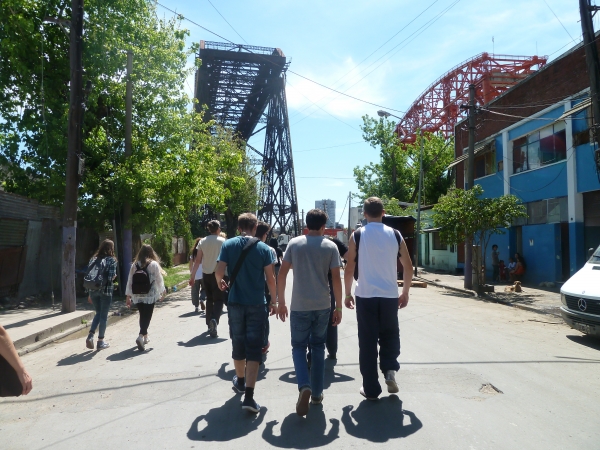
I have a longstanding association and connection with Voluntario Global - I first got in contact with the organisation in 2007 and spent 2 months volunteering in Villa Soldati in July 2008. As a teacher, my aim was always to convert my experiences of volunteering in Voluntario Global's projects into a new initiative involving organising a regular school trip to give young students an opportunity to see, at first hand, what life in Argentina is like for its inhabitants, not least those living in barrios lacking the resources and facilities that they, at home, take for granted.
With the enormous help and co-ordination of the team at Voluntario Global, the dream became a reality and I have accompanied school groups to Buenos Aires to work with Voluntario Global in 2009, 2010 and 2014 - over 50 students in total. But the initial idea has become so much more than a mere "school trip". Students have returned independently to work with Voluntario Global in 2010, 2011, 2012, and next in January 2016. Voluntario Global have supported this initiative 100% and have enhanced our plans taking us to projects in La Boca, Isla Maciel & José Leon Suarez. Understanding, trust and co-operation have been the keys to our mutual success. In 2015 I had the chance to welcome 2 students from Argentina to experience life at my school and gain teaching experience. I look forward to working with Valeria and the whole team of co-ordinators again in the near future. I cannot recommend highly enough the professionalism and care that Voluntario Global shows to its foreign volunteers. I wish the organisation a well deserved 10th Anniversary celebration in 2016.


He later tells me that he is beginning to realise that this experience has taught him never to give up on his dreams, even if it is a struggle to make it all work out at first, ' You need to outgrow yourself", a line I personally appreciate as a wise lesson for all of us who come here to find out some things about us and the new world that surrounds us.

VOLUNTARIO GLOBAL
Voluntario Global helps local communities by being available to discuss anything that local organizations need, and offering ideas for further change and development.
Read more...
CONTACT
Location: General Pacheco. Buenos Aires. Argentina
Email: Diese E-Mail-Adresse ist vor Spambots geschützt! Zur Anzeige muss JavaScript eingeschaltet sein!