Matt's Volunteer Experience working with Children in Buenos Aires
Written by Jesica Franco
Thinking of volunteering abroad? Matt tells you why you should: Matt's #VolunteerExperience working with children in #BuenosAires
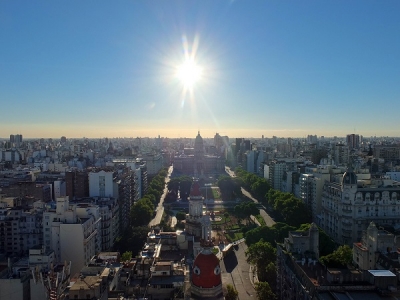
There is an endless list of things to do and see in Buenos Aires. If you are here for a short period of time, here is my recommended itinerary to experience as much of Buenos Aires as you possibly can in just a week!
Monday
Palacio Barolo
You get a bird’s eye view of the city, 22 stories high and a 360-degree viewpoint from the renowned lighthouse. You even get a tour of the magnificent building inspired by Dante’s Divine Comedy. I recommend the day tour where you get to see nothing but clear blue skies and the ocean bordering the city! The tour lasts for approximately an hour and a half with plenty of time to capture your memories on camera.
Address: Avenida de Mayo 1370
La Bomba de Tiempo
If there is any musical performance to watch, La Bomba is definitely it. An incredible percussion ensemble that is sure to leave you jumping along with the rest of the audience and dancing to the infectious beat. Head there a half hour before the show starts to get yourself food and drinks or simply to soak in the atmosphere. Just when you think the performance ends, they bring the performance out to the streets! They parade around the streets of Buenos Aires along with a trail of people dancing to this phenomenon. You are bound to sweat buckets so be sure to wear something light and airy! La Bomba only happens on Monday nights so if you are in Buenos Aires on a Monday, do yourselves a favor and join in the infectious rhythm that is La Bomba!
Address: Sarmiento 3131
Tuesday
Japanese Garden
Amidst the Latin American culture, you will find an exquisite Japanese garden that will make you feel as though you’ve stepped into Japan itself. The Japanese garden offers so much and you can easily spend an hour or two there. From Japanese flowers to koi fishes, the garden has something for everyone. You can’t help but feel peaceful and serene sitting amidst the beautifully manicured garden. You could even pop into the Japanese restaurant within the garden for a quick bite of some of Japan’s famous delicacies. Do remember to bring along 70 pesos for the entrance fee as well as your camera for great pictures by the mini red bridges and fountains!
Address: Av. Casares 2966
Bosques de Palermo
Walking from the Japanese Garden to Bosques de Palermo takes approximately 10 minutes. I would dedicate an entire day to visit the urban park that ranges 400 hectares in the neighborhood of Palermo. It still amazes me how Buenos Aires dedicates a large part of the city to green spaces for people to enjoy a great day outdoors! It is truly a breath of fresh air away from the hustle and bustle of the city. Head on down to the rose gardens or even to the beautiful lake in the midafternoon. You could even rent yourselves a paddle or rowing boat, an activity I would certainly recommend if you wish to take a tour around the lake at your own pace. So put on your walking shoes and take the grand tour of one of the largest city parks in Latin America!
Address: Crossroads of Avenida Sarmiento and Avenida del Libertador
Wednesday
La Boca
The neighborhood offers two must-sees. Caminito as well as La Bombonera for soccer enthusiasts. The streets are lined with box-like houses of all colours. Treat yourselves to a delicious meal of bife de chorizo and a glass of wine as you watch two beautiful dancers take the stage with a round of tango. For the soccer enthusiasts, La Bombonera, rated as the number one stadium to watch a soccer match, is a sight to behold. Splashes of yellow and blue, the colours of soccer team Boca, engulf you as you take a tour around the stadium. Take a step further and do the stadium tour while you’re there!
Address: Brandsen 805
Thursday
Plaza de Mayo
The Argentinian flag flies high and proud in the center of Plaza de Mayo. Thursdays at Plaza de Mayo are especially unique and some might even say exciting. It is the city’s ground zero location for protests. My personal favorite was being a spectator to ‘Madres de la Plaza de Mayo’. Every Thursday at 3.30pm, mothers march around the plaza in search of their disappeared and lost children. It is a march for social justice that started in 1977 and still continues today. With the backdrop of Casa Rosada, also known as the Pink House, these women take a stand and march despite the sweltering heat. Truly admirable and definitely a must see.
Address: Balcarce 50
Friday
Puerto Madero
Its name has probably given it away. Once a port to passing cargo ships, it is now a busy landmark of Buenos Aires with some of the best restaurants and bars. Puerto Madero is best visited in the later part of the evening when the sun is just about to make its descend. Red, orange and yellow flank the skies and it creates the perfect picturesque shot with the bridge, Puente de la Mujer as its main attraction. Do pop into the floating ship museums along the dock and end your evening with dinner in just about any restaurant where the food is always delicious!
Address: Puente de la Mujer
Saturday
Recoleta Cemetery
The city winds down over the weekend and it is a perfect day to stroll along the streets in one of the most well-kept and beautiful neighborhoods in Buenos Aires, also known as Recoleta. Your week would not be complete without taking a tour amongst the dead in the world renowned Cementario de la Recoleta. You could take a guided tour in either English or Spanish and find yourselves enthralled in the city of the dead. You can wander for hours listening to the interesting stories of the many people buried in the cemetery. You most certainly would want to bring along your cameras for this tour!
Address: Junin 1760
Feria de Recoleta
The flea market in Recoleta is one you should not miss. Take a little coffee break after your visit to Cementario de la Recoleta and prepare yourselves for another round of walking as you bask in the ambience that is the flea market. The Recoleta flea market is home to some of the most unique items for sale. You will certainly find yourselves buying something particularly unique which include hand-made leather bags to intricately designed mate sets and even ships in a bottle with your favourite Argentinian soccer team flag on the miniature ship docks.
Address: Junin 1930
Sunday
San Telmo + Plaza Dorrego
As they say, Sunday funday! Close the week with a delightful stroll along San Telmo’s flea market that spans as far as the eye can see. From mate sets, second hand books and even hand crafted jewelry, there is indeed something for everyone! It could get a little overwhelming with the numerous stalls lined up so my advice would be to head there just after lunch. Or you could stop for a quick Quilmes stop! End the day in Plaza Dorrego where a makeshift dancefloor is set up just as the sun makes its descend. Dancers, ranging from amateurs to experts gather in the plaza to dance the tango. It is a sight to behold and a perfect end to the perfect week!
Address: Crossroads of Defensa and Hipolito Yrigoyen

What better way to spend Valentine’s Day than with a thousand other incredibly passionate Boca fans at La Bombonera? The stadium is rated number one to experience a soccer match and it sure does live up to its name! It isn’t just the thrill of watching Boca Juniors play, it’s the experience of being one with the fans and the team that makes it a fulfilling experience. What made it even more exciting was heading to La Bombonera with several other volunteers from Voluntario Global who themselves had never experienced an Argentinian soccer match. We wanted the complete experience and we sure did with these 5 steps!
1. Tickets
Getting a ticket was perhaps the only challenging process. Boca Juniors played their first home game of the season and naturally, hunting for tickets was no easy process. After days of searching online but to no avail, we managed to get tickets from a hostel nearby. They were a little pricey but it was most certainly worth every cent! My advice, splurge on the tickets because this is truly a once in a lifetime experience. Do be sure to check that you get your tickets from a reliable source. You wouldn’t want to head down to La Bombonera and find yourself with an invalid ticket.
2. Attire
The experience wouldn’t be complete if you didn’t look the part! You can most certainly get your Boca jerseys or T-shirts at the stadium itself, though it would be best to get them a day or two before game day. Or you could get the official jerseys from the Nike store! I would recommend heading down to cross streets of Juramento and Cabildo where the streets are lined with all the sports outlets so you can take your pick. Take the subte (subway) to Juramento and the outlets are at the foot of the subte exit. Rest assure you would fit right in with the rest of the fans in a Boca shirt. If you haven’t the time to get a shirt, be sure you’re in Boca colours. You can never go wrong with blue and yellow.
3. Pregame
We certainly did our pregame the Argentinian way! Beers, fernet and of course Boca songs and cheers blasting through the speakers. There really is no better way to get into the spirit of a game. I learnt a cheer or two before heading to the game and it really got me hyped up and into the fighting spirit!
4. Cheering, Swearing and Everything in-Between
We finally get to the stadium and there were at least 3 security checks before actually entering the stadium. It seemed rather solemn walking to the stadium after getting off the bus, almost as though we were going to war. Clearing the security checks took all of 5 minutes and just like that we were off into the stadium. The second you take the stairs to get to the stands, you can hear the hustle and bustle of fans finding their seats or simply getting a spot to get a great view of the pitch.
Anticipation and excitement built as we watched the large digital clock above the field countdown the minutes to the game. When the Boca Juniors stepped onto the pitch, in an instant, every Boca fan in sight rose to their feet. Almost instantaneously the drums started playing and every single fan broke out into a Boca song. It was almost magical how united the Boca fans were. What surprised me even more was how loyal these fans were. With each bad pass or missed goal, they cheered even louder and jumped even higher in support of their team. Every few minutes, the fans, in unison, would start a new cheer or song complete with hand gestures. You can’t help but join in and be a part of what it means to be a fan.
5. Post Match
Get yourself a good ol steak right after the match! Or if you can’t wait to sit yourself down at a restaurant, grab a choripan on your way out of La Bombonera. The night is only complete with an Argentinian feast! The added bonus is that you wouldn’t have to worry about restaurants closing early. Dinner at 11pm might sound a little crazy but restaurants in the city serve dinner till the wee hours of the morning. So grab yourselves a table and you’d find yourself talking about the best and perhaps the worst moments in the match.
Well as the saying goes, the Argentinian experience is never complete without watching a soccer game. I guess that’s just one more thing off my bucket list now! If you’re in the city and you’re thinking about watching a game, the answer is always si, hacelo!

1. We will suggest a song, and while you are listening to it, we will stand next to you explaining the meaning of each single phrase, until you reach a point when you can’t distinguish if the song has finished or if our voice is part of the track.
2. Even though we’re relentless critics of our pais de mierda, when we travel abroad we want everybody to know right away that we’re from Argentina, el mejor país del mundo.
3. We talk about how amazing Patagonia is when we are in Alaska, about how breathtaking Iguazu Falls are when we are at Niagara, and about how wonderful other countries are when we are in Argentina.
4. We dare to teach the Tibetans how to solve their ancient mysteries in two or three simple steps, and of course, we talk to them in Spanish. Easy!
5. We talk loud.
6. Very loud.
7. We kiss you on the cheek when we say hello and goodbye. Always. It doesn´t matter if you are a man, a woman or a dog (we love dogs!).
8. We are experts in opening other people’s fridges.
9. Even though we’re fierce rivals with our neighboring Uruguayans and Chileans back home, when we encounter them abroad we feel an unexpected sense of brotherhood–and have a party!
10. We are the best hosts. And when we are guests we will still act like the hosts.
11. We can turn from being modest and peaceful moderators, to crazy, eager and indefatigable arguers if contradicted in essential issues of life, such as “who is the best football player in history?”.
12. Our backpacker-budget will not hold us back from expensive activities such as a private full diving course in Similan Islands (we’ll also invite our friends), even if we have to spend our last penny on it.
13. We proclaim the “Patria Grande” (Latin America as one only Nation), but at the same time we explain to the Brazilians & Uruguayans that football, mate and Tango are exclusively Argentinean.
14. Every second word we say is either “boluuudo” or “che” or a combination thereof.
15. Rock and Roll is argentino and Charly García is the biggest star.
16. Sooner or later we will surround ourselves with other Argentines, with whom we will try to show the world the benefits of being from Argentina.
17. We are los reyes del chamuyo, which is an exquisite mix of bullshitting while showing the most charming personality.
18. We ask lots of advice to finally end up doing whatever we want.
Taken from: http://matadornetwork.com/life/18-ways-instantly-recognize-argentine-traveler/

If you find yourself Googling ‘How to Make Friends in A Foreign Country’, you and I have something very much in common. Before embarking on this journey to a land so far away, I wondered if I would be able to make friends in this city. I come from Singapore, a rather conservative country where starting a conversation with a random stranger does not come naturally. But before you take pity on me, let me first say that I am no introvert. I have no problems socializing and I would like to believe that I am an extrovert. Someone like that couldn’t possibly have troubles meeting new people right? Wrong!
The language barrier made it so much more difficult to converse with the Argentinian locals. In the month that I’ve been here, I’ve learnt a few tips and tricks that helped me work my way around the crowd. Of course learning the language is a great starter. Knocking back a drink or two helped at first but I realized all I needed was a big ol’ smile on my face!
1. Make an Effort
If you are new to the Spanish language, striking a conversation could be a daunting activity. Buying groceries from the supermarket and having a conversation with the cashier could be as nerve-wracking as speaking politics. You will come to realize that if you make the slightest effort and show that you are trying to learn their language, they will be more than happy to speak to you, even if it is just to find out how your day is going. Try being the first to say hola! It could be pretty intimidating looking a stranger in the eye and saying hello but hey, with a smile on your face, you’d find that it really isn’t as scary.
2. Embrace the Difference
Having differences is not always a bad thing. I come from a completely different cultural and racial background from anyone in Argentina and I had the impression that I wouldn’t be able to connect with anyone I met here. Little did I know that the difference is a brilliant conversation starter! I believe the second you start embracing the difference, you will realize that people are really open to a mix of cultures and they’re just as willing to learn about the differences as you are.
3. Put Yourself Out There
There are countless of ways to meet people in this city. It could be a bar, the park, the theatre, the possibilities are endless! If you’re new to the city and want to know the best places to go, Facebook is perhaps your best friend. With the endless events to go for, you’re bound to meet really great people and even forge friendships. One of my personal favorites’ is Mundo Lingo, a place where you meet people from all over the world who are in this city for various reasons. They meet three times a week, at different locations with good beer and free popcorn or pizza (depending on the day). Or, you could even try the famous pubcrawl for a great night of drinks, music and fun! If you are willing to put yourself out there and try new things, you will be meeting people and making friends in no time!
4. Take a Positive Approach
If you have a positive mindset, your outlook changes for the better. I’m pretty sure not everyone you meet will be someone you can get along with. But like the saying goes, ‘People come into your life either to teach you something or to learn from you’. So be open-minded and remember that there is always something you can learn from every new person you meet. And who knows? The most unlikely person could turn out to be your newfound friend.
5. Let Your Guard Down
If you come from a more conservative background like I do, the sense of intimacy here might just take you by surprise. People here are generally affectionate with each other and they greet each other with a kiss on the cheek. It took me about a week to get used to that but I grew into it and I’m definitely taking this custom home with me! It is a beautiful way to greet someone and it really shows your appreciation towards them. You will notice that Argentinians have very close personal spaces and are not afraid to show their affection. My advice? Let your guard down and be open to these cultural differences. Perhaps you could share some of your customs from back home too!

Last week, Voluntario Global had the pleasure of delivering a charitable donation to one of our kindergartens in Suárez—a donation made possible by the gracious efforts of Milhouse Hostel manager, Mariano. Upon arrival, Liliana, one of the kindergarten’s founders, led us down the street to an empty lot containing the bare bones of construction. Thanks to fundraising efforts like Mariano’s, we can help this small plot of land will soon become home to a new-and-improved kindergarten.
Before this recent development, Liliana and her colleagues had been renting out their former locality for the duration of a whopping seven years. Throughout the school year, the kindergarten / day care center typically fosters around sixty children, ranging from eight-month-old babies, to five-year-old youngsters. Their doors stay open for a daily stretch of eight hours, as opposed to the three or four-hour days customary to most kindergartens. These extended hours function in providing much-needed relief for numerous single mothers in the area, majority of whom must endure long and tiring work days in order to provide for their families. Liliana looks to this oncoming chapter with a mixture of emotions: fear that the facilities might not be ready in time, pride in finally having a spot to call their own, and an unavoidable nostalgia for leaving behind a place that has enabled their growth up to this point.
If all goes as planned, the kindergarten should be up and running by the end of February. Voluntario Global salutes the hard work and dedication of those who have contributed to this wonderful endeavor.

Though my decision to embark on this journey to Argentina involved little hesitation, the months leading up to my trip were certainly not without worry. My impending life abroad caused for an endless list of questions. How well would I cope with the major lifestyle changes that lay ahead— the language barrier, the homesickness, the daunting distance standing between me and any half-decent Mexican food? I suddenly found myself scrambling to take in, and in some forms, utilize the many aspects of California life I had long-taken for granted: its beautiful beaches, winding canyons, the overwhelming accessibility to all things organic. And while I knew I’d survive a few months without free-range chicken and pressed juice, I was sure I’d miss the scenery. Aside from one very unfortunate, fruitless quest for hot sauce, Buenos Aires has been graciously accommodating. The lush green parks and gardens scattering the city seem to taunt my preconceived notions of living in this big city. Unlike California, the concept of a drought remains intangible, and trips to the park never require a trip to the gas station. It’s now been two months since my arrival, and I can confidently say that the tables have turned. Need proof? Here are three breathtaking parks and gardens of Palermo that will never fail to please.
EL ROSEDAL (The Rose Garden) Avenida Infanta Isabel & Iraola
El Rosedal lies at the heart of the expansive Parque Tres de Febrero, otherwise known as the Bosques de Palermo (Palermo Woods). The park is home to over 1,000 species of roses, lining its many winding walkways leading a diversity of guests towards numerous gazebos, picturesque bridges, and a charming lake equipped with paddle boats and gaggles of geese. If you’re into literature, make sure to check out the Poets’ Garden— one of the park’s main attractions, due to its large collection of statues depicting various renowned writers from around the world.
JARDÍN JAPONÉS (Japanese Garden) Av. Casares 2966
The Japanese garden has become a symbol of intercultural relations in Buenos Aires. It’s one of the largest of its type outside Japan. Apart from overall beauty and serenity found inside its gates, the garden also offers a number of attractions, including a large cultural center housing various exhibits and artisanal classes, a greenhouse containing an endless array of bonsai trees, flowers and plants for purchase, a traditional Japanese teahouse, gift shop, and much more. You can grab a bite to eat at the restaurant, or even feed the brightly colored carps inhabiting the lake. With its long list of activities and masterful landscaping, the Jardín Japonés can be found enjoyable to all.
JARDÍN BOTÁNICO (Botanical Garden) Av. Santa Fe 3951
This has easily become my favorite Buenos Aires hideaway. The 17 acre haven holds approximately 5,500 species of plants, trees and shrubs, as well as a number of sculptures, monuments and greenhouses. If that doesn’t impress you, the garden serves as a great place to escape the heat with its plentiful shade and refreshing scent of nature, all the while blocking out the bustling city sounds which encompass it. Whether you’re looking for a romantic outing with a significant other, or merely a quiet place to read and reflect, you’ll be sure to enjoy the visit.

Energetic youth
Visiting the laundry cooperative “Su lavandería”, I was very impressed by the energy and the motivation the young people working there are investing. All of them are immatriculated at high schools or universities or do any kind of professional formations besides spending a few hours per week working at the laundry. The nine guys and girls, all in the age of 17 to 26, reach the aim of satisfying all of their clients who are basically entrepreneurs in the gastronomic sector and hotel businesses. The laundry offers washing, drying and ironing service, available 365 days a year.
Creating perspectives
So this working cooperative creates an opportunity for the young people it employs to finish their careers, which they otherwise probably could not afford. The initiative arose as a part of the Voluntario Global organization in 2008, and from that moment on, it tries hard to improve and win orders.
Its values
The atmosphere at the laundry seemed very warm-hearted to me because of the people I met: From the moment I arrived, I felt welcome and everybody started talking to me openly. I noticed that they care about values of respecting each other and making decisions democratically. The laundry team is used to have monthly meetings discussing all the recent issues. Furthermore, the social cooperative not only acts with respect towards everybody, but also towards the environment. Everything is tried to make the washing process more sustainable and ecologically sensitive.
Descubriendo Buenos Aires: Cooperativa de trabajo Su Lavandería
En mi visita a la cooperativa de trabajo "Su lavandería", me impresionó la energía de los jóvenes empleados allí, que todos al lado de pasar algún tiempo de la semana allá, se dedican a estudios universitarios o varias formaciones profesionales. Los nueve chicos y chicas, todos en la edad entre 17 y 26 años, consiguen que sus clientes, todos de empresas de gastronomía y hotelería, están muy satisfechos. A aquellos, ofrece servicios de lavado, secado y planchado disponibles todos los días del año.
Construyendo perspectivas
Dicha Cooperativa de Trabajo Limitada entonces da la oportunidad de terminar sus carreras a estos jóvenes, que la mayoría de veces de otro modo no se podrían financiar. Fue iniciada como parte de la organización Voluntario Global en 2008, y desde este momento sigue mejorándose y ganando encargos.
Valores
El ambiente de la lavandería me pareció muy cálido por la gente que encontré, me sentía muy bienvenida tan pronto como llegué allá, como todos me hablaron muy abiertamente desde el primer momento. Se ví que comparten valores como el respeto de cada uno al otro y la igualidad de todos que es condición para la forma en que se toman las decisiones en la lavandería: Hay encuentros mensuales en que charlan todo que recien pasa. La cooperativa social no solo tiene un trato respetuoso entre el equipo, sino también al medioambiente. Intenta crear el proceso de lavado tan sostenible y suave como posible.

The intricate soundscapes of Buenos Aires are nearly impossible to ignore. Take a walk down the street, or merely crack open a window at any given time or day, and you’ll be sure to hear the city’s song: a unique blend of birds chirping, cars honking, followed by the occasional profanity or echoes of a rowdy celebration in the distance.
For the less observant, it’s not uncommon to come across the more literal form of music as well. Your cab driver cranks up his favorite Beatles’ classic on your way to a local bar, where you’re fortunate enough to witness a couple brave gringas belt out their versions of Shakira. Music has become a binding bridge here in Argentina, as it has throughout the rest of the world. I came face-to-face with this notion shortly after my arrival in Buenos Aires—turns out, scoring concert tickets to the Stones’ may prove virtually impossible in both hemispheres. While this realization begged itself more bitterly than sweet, my recent trip to one of Voluntario Global’s kindergartens in Barracas quickly restored my faith in the power of music as a universal language.
On the bus ride over, our Parisian volunteer, Elise, shared some of her experience working with the four-year-old students in Barracas: “They ask me why I talk funny,” she said smiling bashfully. Despite the aforementioned language barrier, she’s instantly greeted by a swarm of giddy beaming children, each one fighting for their chance at a hug. I later watch in awe as Elise and the teacher somehow manage to help nearly twenty rowdy students transcend chaos into chorus. The class greets each other with their routine welcome song, “El Mono,” followed by a quick rehearsal for their end-of-year show—ironically enough, singing the Spanish rendition of Frozen’s “Let It Go.” By the looks of it, both Elise and her students allowed the gift of song to supersede whatever premonitions might have stood in the way of integration.
However anecdotal this account of my trip to Barracas may have already seemed, I’ll humbly offer the following advice to any prospective volunteers, whom, at some point, may find themselves disillusioned by the cultural differences in their path, be it language barriers or sold out concerts: before you turn back in defeat, take a walk around the block with open ears, an open mind, and merely listen for your familiar song.

Two months is a long time to get properly acquainted with a new environment. During this time, I have had my share of gelato and helado (ice cream). In Buenos Aires, there is a never-ending supply of the frozen sweet with a gelateria or heladeria (ice cream shop) on almost every street corner! With a rich history dating back to the 18th century with their Italian ancestors, ice cream is a fundamental part of the Argentinean culture.
Some might be wondering, what is the difference between gelato and helado? For starters, there’s a slightly different process in which gelato and helado is made. Gelato is churned at a much slower rate, incorporating less air and leaving the gelato denser than ice cream. Another important fact to remember is that gelato is served at a slightly warmer temperature than ice cream, giving it silkier and softer texture. But it also has a tendency to melt quicker so eat up!
Just in time for the hot summer season, here’s our top five picks for the best spots to try some authentic Argentinean flavors like Tramontana, Dulce de Leche, chocolate con almendras (almonds) or Malbec y frutos rojos (Malbec and berries) For a more thorough list of flavors check out this website.
1. Rapanui – This is by far the best tasting gelato in Buenos Aires! There are a few different locations but if you are heading to the Recoleta Cemetery, take a 2 min walk to Rapanui. It’s so worth it, especially when you can stock up on Christmas gifts with a purchase of a box of their homemade chocolates!
2. Cadore – For the traditionalists like myself Cadore is the place to go! This vintage gelateria is a family-run business that started in the late 18th century in Venice, Italy. Cadore is a friendly parlor located on Avenida de Corrientes and Rodriguez Pena.
3. Freddo – One of the biggest chain of ice cream parlors in Buenos Aires and provides the daily customer a variety of flavors at a reasonably cheap price.
4. Volta – Another one of the chain ice cream parlors but with a sophisticated edge, they make chocolate and have some of the best chocolate flavors. Again this is one of the more moderate priced heladerias.
5. Persico – One of the chain heladerias that is equally good in quality and price. Definitely worth checking out if you find one as you are walking along the street.
For more tips on the best gelato and helado in Buenos Aires check out Gringo or for more information about general chain ice cream parlors check out this blog. Your welcome and enjoy!!

VOLUNTARIO GLOBAL
Voluntario Global helps local communities by being available to discuss anything that local organizations need, and offering ideas for further change and development.
Read more...
CONTACT
Location: General Pacheco. Buenos Aires. Argentina
Email: This email address is being protected from spambots. You need JavaScript enabled to view it.